The nose and facial aging
The nose sits at the center of the face and it keeps changing long after the rest of the face has finished growing. A tip that has dropped reads as age even when everything around it has been addressed, which is why a lift alone sometimes leaves people feeling that something is still off.
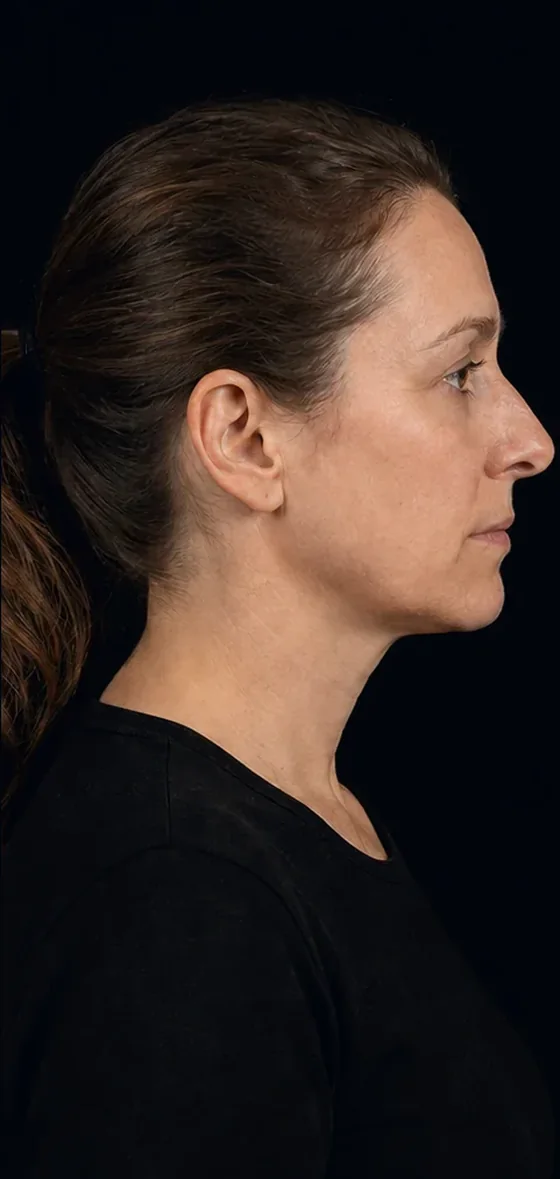
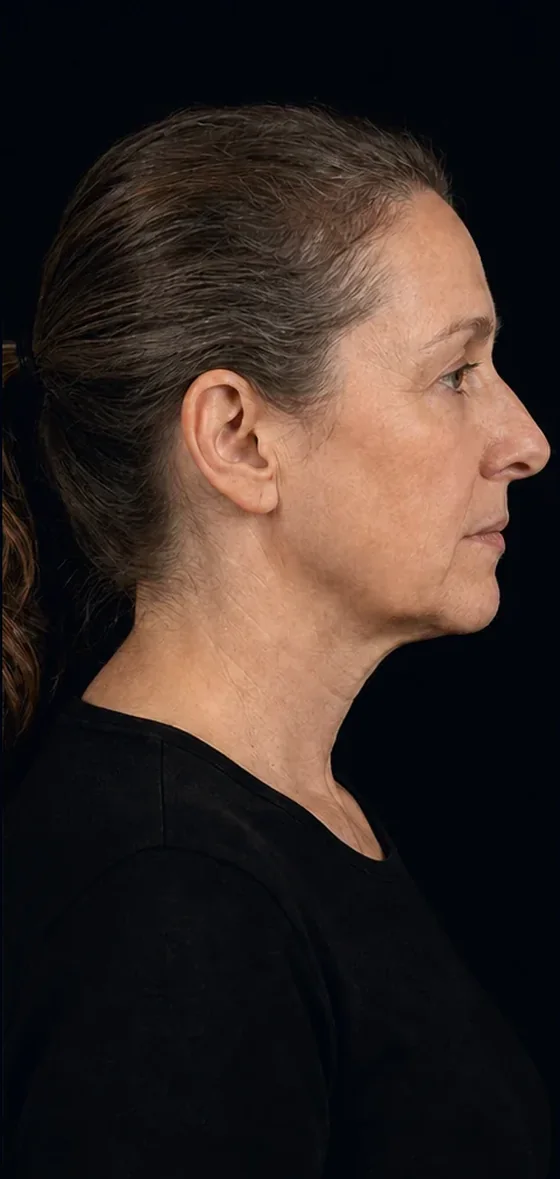
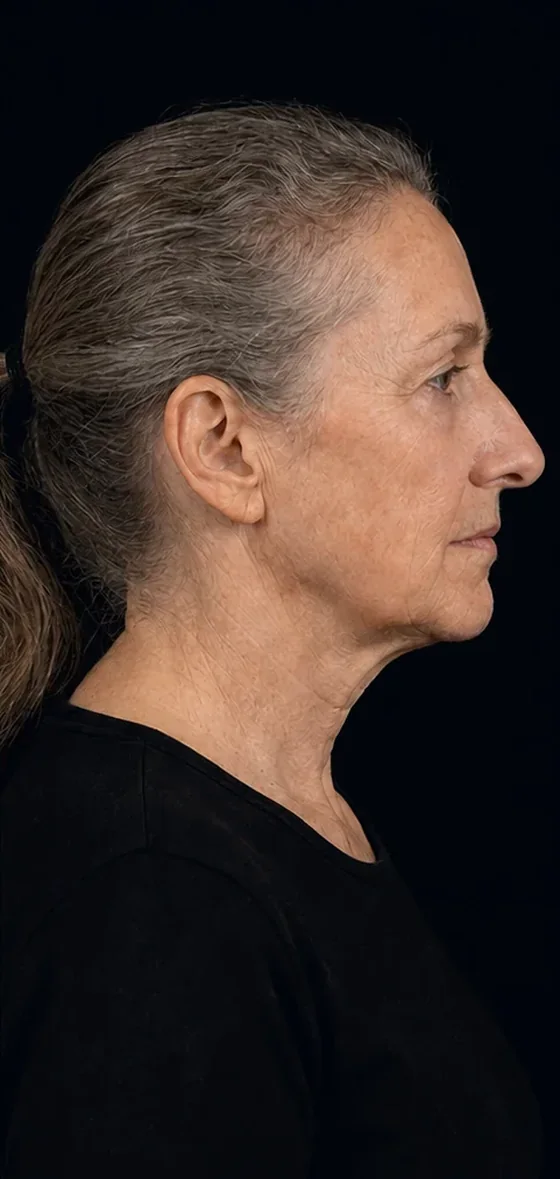

The nose does not stop changing
The framework of the lower nose is cartilage, and it is held in position by its attachments: the lower lateral cartilages to the upper laterals at the scroll, and the whole complex to the caudal septum. Those attachments loosen over decades, and the cartilage itself becomes less resilient. The tip is a suspended structure, and when the suspension weakens it descends. This is the same story the rest of this guide tells about the face, happening in a different tissue.
The bone supporting the nose also remodels. A small CT comparison of younger and older men found posterior remodeling near the pyriform aperture, the bony opening beneath the nose. This supports considering skeletal support in an older patient, but does not establish an identical pattern in everyone. [1]
What that actually looks like
- The tip drops and the nose reads longer. Nothing has been added. A structure that was higher is now lower, exactly as in the midface.
- The angle between the columella and the upper lip closes. The upper lip lengthens with age at the same time, so the two changes compound each other.
- A bridge that was mild starts to look prominent. In most cases the bridge has not grown. The tip has fallen away from it, and the profile now reads as a hump.
- The skin behaves differently at each end. Over the bridge it thins, so the underlying framework shows more. At the tip it often thickens and becomes more sebaceous, which hides definition.
- Breathing frequently gets worse. The internal and external nasal valves depend on the same cartilage support that is weakening, so they narrow.
Why the center of the face carries more weight than its size suggests
People look at eyes and mouths, and the nose sits directly between them. When the tip has descended and the upper lip has lengthened, the entire central third of the face reads older, and no amount of work on the cheek or jawline changes that. A concern about the central face may remain after a lift and should be discussed separately. This does not mean that an additional operation is necessary.
What a rejuvenation rhinoplasty is trying to do
It is a restoration of support rather than a reduction. The work is mostly structural: a columellar strut or a septal extension graft to give the tip something to sit on, suture techniques to set rotation and projection, and cartilage taken from the septum where it is available. The intent is to return the tip to where it used to be rather than to build a different nose.
The bridge usually needs less than people expect. Once the tip is back up, a profile that looked like it needed a large reduction often needs a modest one, and sometimes needs none at all. Taking a lot of bridge down in an older nose without restoring tip support tends to make the nose look longer and more operated, not younger.
Breathing is usually part of the same operation
An aging nose that has lost cartilage support very often obstructs, and the patient has usually put it down to allergies or getting older. The same grafts that restore the tip also open the valves: spreader grafts for the internal valve, alar batten or rim grafts for the external. This is worth raising at the consultation, because a functional problem changes the plan and sometimes changes how the operation is covered.
How it sits alongside a lift
A facelift works on the lateral face and the neck. A rhinoplasty works on the central third. They do not overlap, and they do not substitute for one another. Combining them in a single anesthetic is common and reasonable in a healthy patient, and it means one recovery rather than two. It also means a longer operation, more swelling at once, and a longer period before the result settles, so the decision is genuinely a trade and should be made deliberately rather than for convenience.
Some surgeons prefer to stage them, particularly when the nose needs significant grafting. Either approach is defensible. What matters is that the reasoning is explained to you.
What it cannot do
Rhinoplasty will not lift a cheek, sharpen a jawline, or improve the neck. It will not change skin quality anywhere, including on the nose itself. Thick skin at the tip sets a hard limit on how much definition is achievable, and no technique gets around that. Bone loss at the base of the nose is not corrected by working on the nose alone.
Timing and recovery
Early swelling often improves over weeks, while contour refinement can continue for about a year. The American Society of Plastic Surgeons notes that swelling can fluctuate during this period. Ask your surgeon what is realistic for your skin, operative plan and any prior surgery; a general timeline does not predict an individual result. [2]
What can go wrong with rhinoplasty
Rhinoplasty has its own risks, in addition to those discussed for facelift surgery. A plan to improve appearance or breathing does not guarantee either outcome. [3]
- Breathing: nasal breathing can remain difficult or become worse.
- Appearance: the result may not meet your expectations, and revision surgery may be considered.
- Bleeding and smell: bleeding and a change in the sense of smell are possible. [4]
- Healing: infection, unfavorable scars, skin discoloration, prolonged swelling, numbness or pain can occur.
- Septum: a septal perforation can develop. Repair may be difficult and is not always successful.
- Anesthesia: general medical and anesthetic risks must be discussed for the planned operation.
Ask which risks are most relevant to your proposed procedure, what happens if a problem develops, and how the surgeon approaches revision decisions. This list is not a substitute for informed consent.
Putting it together
| What changes with time | What addresses it | What does not |
|---|---|---|
| Tip support and rotation | Structural grafting, suture techniques to reset rotation | Filler at the tip, any lift |
| Apparent bridge prominence | Restoring the tip first, then a modest dorsal adjustment if still needed | Reduction of the bridge alone |
| Closed columella to lip angle | Tip rotation, sometimes addressing the upper lip separately | Anything done to the bridge |
| Valve narrowing and obstruction | Spreader, batten or rim grafts placed at the same time | Cosmetic reduction, which can worsen it |
| Skin thickness at the tip | Managing expectations, sometimes medical treatment of the skin | Any surgical technique |
| Loss of support at the bony base | Volume at the skeletal level, considered with the rest of the midface | Rhinoplasty alone |
On who does this work. Facial plastic surgeons and plastic surgeons are separate credentials with separate training pathways and separate certifying boards. Neither is a shorthand for the other, and the distinction matters more in rhinoplasty than almost anywhere else because of how much of the training is specific to the nose and the airway. How to choose a surgeon covers what to ask.
Selected sources and their limits
- Pessa et al. The effect of skeletal remodeling on the nasal profile (1999). Small comparative CT study in men; useful anatomical evidence, not an individual prediction.
- American Society of Plastic Surgeons: rhinoplasty recovery. Patient education guidance, not a study of every procedure or skin type.
- American Society of Plastic Surgeons: rhinoplasty risks and safety. General risk guidance; individual risk requires a clinical assessment.
- Mayo Clinic: rhinoplasty. Patient education covering procedure risks and recovery.